To awaken, liberate and protect all beings…
We are a lay Zen practice community, and offer several opportunities to meditate together each week in our zendo. An aim of our practice is to reduce suffering for all beings and help create a more peaceful and loving world. Our Guiding Teacher is Valerie Forstman, an Associate Zen Master of the Sanbo Zen lineage.


Learn to Meditate
What We Do
We offer online/hybrid programming, meditation instruction, and zendo orientation during all our sitting times. Additionally, we host a weekly Intro to Zen class on Sunday mornings and various retreats throughout the year. We embrace diversity, providing the practice of zazen to people of every race, nationality, class, gender, sexual orientation, age, and physical ability.
Sanbo Zen Lineage
The Sanbo Zen is a Zen-Buddhist Religious Foundation (shûkyô-hôjin) started by Yasutani Hakuun Roshi in 1954
Sanbo Zen, an international Zen school based in Kamakura, Japan, has helped significantly in the transmission of the Zen Dharma to the West over the past fifty or sixty years. The Three Pillars of Zen, published in 1965, was based on the teachings of this school, and several well-known teachers in the West studied in the Sanbo Zen lineage, among them Kapleau Roshi, Maezumi Roshi and Robert Aitken Roshi.
Nevertheless, many of these teachers and their successors did not maintain their connection to this source of the Dharma, and there are now few direct Sanbo Zen teachers in America today, Valerie Forstman being one of them.
In the early decades of the 20th century, a high-ranking Japanese Soto Zen master, Harada Roshi, felt something vital was missing from the Zen in the Soto establishment as he experienced it, and decided to go and train in koan study under a master in Rinzai Zen. He did this to help to clarify the central position in Zen of the direct experience of awakening. Then Yasutani Roshi, another Soto master, joined him, became his student, and founded the Sanbo Kyodan (as it was formerly called), with the stated aim of standing at the origin-point of Buddhism, the awakening of Shakyamuni Buddha, and the origin-point of Japanese Zen, the awakening of Dogen Zenji.
The primary objectives were:
- To bring back the actual experience of deep awakening—the heart of Zen—as a central focus.
- To that end, to offer intensive koan study along the lines formulated by Hakuin Zenji in the 1700’s.
- To make the training available to lay practitioners.
This third aim soon bore fruit: the third leader of Sanbo Zen, Yasutani’s principal successor, was Yamada Koun Roshi, a layman with a family and a job running a large health center.
Generally, Sanbo Zen became known in the West both through its openness to training westerners, and through the popularity of the book The Three Pillars of Zen, which was compiled by three of Yasutani’s students, Yamada Koun Roshi, Kubota Jiun Roshi and Philip Kapleau, under whose name the book was published in the West in 1965.
Soon after inaugurating Mountain Cloud in 1985, “PK,” as he was known to his students, was obliged to return to his center in Rochester, NY, and the zen center entered a new phase of its life. From 1991 to 2006 Father Pat Hawk Roshi visited from his home in Arizona to lead sesshin a few times a year. Thereafter several different teachers taught intermittently at the center. In late 2010, some of the original students of “PK” invited a second Sanbo Zen teacher, Henry Shukman, to come and teach at the center, and in 2013 Henry was officially appointed the center’s teacher. Valerie Forstman began co-teaching with Henry at Mountain Cloud in 2020 and took his place as Guiding Teacher in late 2022.


Land Acknowledgement
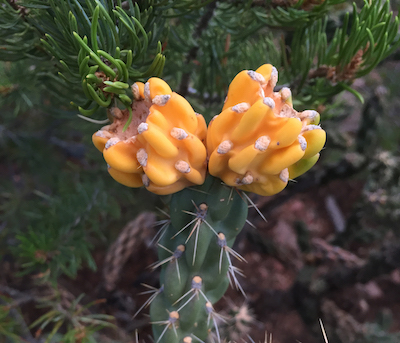
Mountain Cloud is based in O’ga P’ogeh Owingeh (White Shell Water Place), the unceded ancestral lands of the Tewa people, colonized as Santa Fe, New Mexico. These buildings were built with the sands and soils of these arroyos. We share this space with the bobcat, coyote, juniper, raven, pinon, cholla, Steller’s Jay, ants, and so many more. O’ga P’ogeh has and continues to be home to many Tribal communities including the Tewa, Keres, and Towa Pueblos, and the Jicarilla Apache. The descendants of these communities live in O’ga P’ogeh and in surrounding present-day Pueblos of Nambe, Pojoaque, San Ildefonso, Ohkay Owingeh, Santa Clara and Tesuque (and others!).
Mountain Cloud honors and celebrates the excellence and wisdom of these neighbors, friends, and relatives, both past and present, who have stewarded this land for generations and continue to do so. We recognize the centuries of forced displacement, settler colonialism, violence, and attempted genocide that exist in the land, culture, and peoples here and the continued existence of this legacy in modern colonial systems. Mountain Cloud recognizes that we benefit from this legacy of violence and commit to building trust with our tribal neighbors, repairing harm, learning and unlearning, and centering the knowledge and expertise indigenous to this land, in the spirit of humility, compassion, and liberation.
This land is alive, our relationships are alive, and we acknowledge our connectedness and responsibility to healing and nurturing both. We commit in each moment to put this acknowledgement into action.
One way you can move this acknowledgement into action is by contributing to the O’ga P’ogeh Land Tax. Learn more: https://www.ogapogehlandtax.org/
Sources:

We are happy to connect with you
Subscribe here to receive our weekly newsletter and information about current and upcoming events.

Retreats & Visiting Resident Program
The Center
This beautiful center in the foothills of the Sangre de Cristo mountains was hand-built in 1985 by Philip Kapleau Roshi and a number of his students. The building was designed to follow the layout of a traditional Japanese zendo, while incorporating elements of Southwestern architecture, such as its viga beams and straw-and-adobe walls. We have a variety of the traditional drums and bells of a Zen temple as well as an earthen floor. Our zendo sits on a hillside just above the city of Santa Fe amid juniper and piñon trees.
We have two dozen acres of beautiful land around the center. This is a special place, right on the edge of the official city boundary of Santa Fe, within three miles of downtown, where the trees, cactus, plants and rocks, and the numerous wildlife, have hardly been disturbed by humanity. As we sit in our zendo we can feel very intimate with the nature around us. Bobcat, deer, hawk, coyote, rabbit, jackrabbit, snake, elk and many birds frequent this land.

ACCOMMODATION
Staying at Mountain Cloud Zen Center
We have four cabins and a cottage and are able to sleep about 20 people during our sesshins. We also allow a small number of people to stay with us for personal retreats (one month minimum).